A 7-day Umrah package is the most commonly booked option from the US, typically split across three to four nights each in Makkah and Madinah, and works well for travelers with limited time off work or a tighter budget. Once you clear immigration on a valid Umrah visa, you’re permitted to stay in Saudi Arabia for up to 90 days, so a 7-day trip is a choice you’re making about pace and priorities, not a limit being imposed on you. Longer packages, 10, 14, or 21 days, add more time for Ziyarat (guided visits to historically significant sites), rest days, and a less rushed pace, at a cost that scales mostly with hotel nights rather than the whole trip multiplying in price.
If you’ve searched “7 days umrah package” and started seeing 10-day, 14-day, and even 21-day options listed alongside it, the natural question is whether more days actually means a “better” Umrah, or just a longer one. The honest answer is that duration is mostly a logistics decision: how much time you can take off, who you’re traveling with, and how you want to pace prayer, rest, and sightseeing.
This guide walks through what a 7-day package typically includes, what longer durations add, how cost actually scales with extra days, and how to match the length of your trip to your own situation rather than to whatever number shows up first in search results.
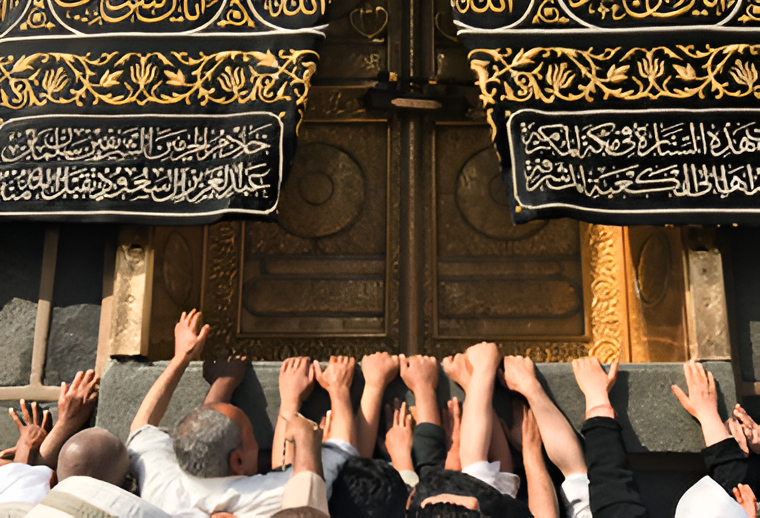
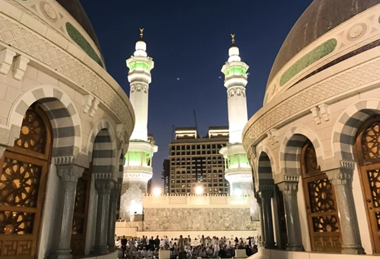
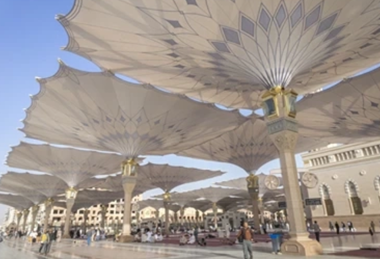
A typical 7-day Umrah package is built around two stays, three to four nights in Makkah and three to four nights in Madinah, with travel days at the start and end absorbing part of the week. Hotels are usually chosen for proximity to the Haram (the mosque complex around the Kaaba in Makkah, or the Prophet’s Mosque in Madinah), and the package typically bundles airport transfers, intercity transport between the two cities, and Umrah visa assistance alongside the hotel stays.
Al Shafie Travels’ own 7-day Umrah packages, for example, list land packages, hotel stays, transfers, and visa assistance, starting around $595 per person for a 5-star shuttle option and up to $945 for the luxury tier, with flights priced separately based on your departure city, in line with the flight costs covered in our guide to Umrah flights from the USA. The split between Makkah and Madinah nights can shift slightly depending on flight timing into Jeddah versus Madinah, but most 7-day itineraries land somewhere close to even.
For most first-time travelers, this is the version of “Umrah” that comes to mind: a focused week centered on Tawaf, Sa’i, and prayer at the two holiest sites in Islam, without much built-in time for anything beyond that.
Most 7-day packages follow a similar rhythm: arrival and transfer, several days centered on Makkah, a transfer to Madinah, and a final stretch before the flight home. Day 1 typically covers arrival into Jeddah and the transfer to your hotel in Makkah, often the most physically demanding day simply because of the long flight beforehand. Days 2 through 4 are centered in Makkah, with Umrah performed early in the stay, often on arrival day or the morning after, once you’ve rested, followed by daily prayers at the Haram and, where included, a Ziyarat visit to sites like Jabal al-Noor.
Day 5 is usually a travel day: checkout from the Makkah hotel, the drive to Madinah, roughly four to five hours by road depending on the route, and check-in at the Madinah hotel in the afternoon or evening. Days 6 and 7 are spent in Madinah, centered on prayers at the Prophet’s Mosque and, depending on the package, a Ziyarat visit to Quba Mosque or other nearby historical sites, before the return flight home.
This structure isn’t fixed. Some packages reverse the order, starting in Madinah and ending in Makkah, depending on which city your inbound flight lands closest to. But the underlying shape, one transfer day, several days in each city, and rituals performed early rather than saved for the end, holds across most 7-day itineraries.
The fact that an Umrah visa allows a much longer stay than most people use is worth understanding, because it reframes “how many days should I book” as a question about you, not about visa rules. Once you clear immigration on a valid Umrah visa, current rules permit a stay of up to 90 days in Saudi Arabia, far more than the 7 to 21 days most packages are built around.
A 90-day visa validity doesn’t mean a longer trip is automatically a more “complete” or more spiritually significant Umrah. It’s a window you’re allowed to use, not a benchmark you’re expected to hit. Almost nobody books a package anywhere near that length, and the rituals themselves, Tawaf, Sa’i, and the associated prayers, take the same few hours regardless of whether your overall trip is 7 days or 70.
What the long visa window does mean practically is that there’s room to extend a trip if circumstances change, illness, flight disruptions, or simply wanting an extra day before a long flight home, without running into a hard visa ceiling the way you might with a tourist visa for some other countries. That flexibility is part of why duration is worth treating as a planning decision rather than something dictated by the visa itself.
A 7-day package tends to work best for working professionals with limited paid time off, families traveling with children who can’t be away from school for long, and anyone prioritizing the core rituals over an extensive sightseeing itinerary. For pilgrims balancing work schedules and travel costs, a 7-day package is often described as the practical middle ground, manageable for people who can’t easily take two weeks off, while still allowing a comfortable stay in both cities.
The trade-offs are real, though. Seven days leaves little margin for jet lag recovery, especially on the outbound leg when a long flight is followed almost immediately by the physical demands of Tawaf and Sa’i. It also compresses Ziyarat, visits to historical sites connected to early Islamic history, into a single rushed half-day in each city rather than spreading them out, and leaves very little buffer if a flight is delayed, someone gets sick, or you simply want an extra day to rest before flying home.
None of this makes 7 days the “wrong” choice. For a focused trip centered on the core rituals, with Ziyarat treated as a bonus rather than a priority, 7 days is often exactly enough. The question is whether that description matches what you actually want from the trip.
The biggest practical difference between a 7-day and a 14-day package isn’t more time at the Haram, it’s room for Ziyarat and rest without either one cutting into the other. A 14-day itinerary is generally considered ideal for pilgrims who want to include Ziyarat in both Makkah and Madinah without it feeling rushed, spreading visits to historical sites across multiple days instead of condensing them into one exhausting outing.
In Makkah, that often means visiting Jabal al-Noor (the mountain containing the cave where the Prophet is said to have received his first revelation) and Jabal Thawr (where he and Abu Bakr took shelter during the migration to Madinah) on separate days rather than back to back. In Madinah, it can mean a more relaxed visit to Quba Mosque (the first mosque built in Islam) and the historical sites connected to the Battle of Uhud, rather than treating them as a single checklist stop.
For families traveling with elderly parents or young children, the extra week often matters more for pacing than for sightseeing. A 14-day itinerary leaves room for an off day if someone is tired, flexible prayer-time scheduling instead of rushing between obligations, and a buffer before the flight home so the last day isn’t spent packing in exhaustion.
Packages of 21 days or more are less common, and when people do book them, it’s rarely 21 days spent entirely between Makkah and Madinah. More often, a longer trip is split: roughly 10 to 14 days for Umrah itself, with the remaining time used for a side trip to a nearby destination before or after the religious portion of the journey. For US-based travelers, a few days in Istanbul, Dubai, or Jordan are common additions, places Al Shafie Travels also arranges tours to, making it possible to combine a religious trip with a broader travel itinerary in a single time-off window from work.
The other group booking 21-plus day trips tends to be travelers visiting extended family in the region, where the Umrah itself might only take a few days but the overall trip is built around family time as much as the pilgrimage. In both cases, the longer duration isn’t really about the Umrah portion taking longer. It’s about what else fits around it.
A 14-day package does not cost twice as much as a 7-day package, and a 21-day package is not three times the price, because flights make up a large, fixed share of the total cost regardless of how long you stay. Once that fixed cost is covered, the marginal cost of extra days comes down mostly to hotel nights and meals. Standard hotel rooms near the Haram typically run somewhere between $50 and $150 per night, so an extra week of hotel stays adds a predictable, bounded amount rather than scaling the entire package.
Overall, most pilgrims from the US end up somewhere between $2,000 and $5,000 per person total, depending on season, flight cost, hotel category, and trip length, with the season often moving the number more than a few extra days do. Costs during Ramadan and other peak periods can run 20 to 40 percent higher than the rest of the year, which can make a shorter trip during Ramadan cost more than a longer trip booked during a quieter month.
The opportunity here is that an extra few days of hotel stay is often a smaller addition to your total cost than it feels like when you’re comparing package prices side by side. The risk is comparing total prices directly and assuming the longer package is proportionally worse value. Instead, it helps to work out the cost per additional night, total package price minus the flight-equivalent cost of the shortest option, divided by the extra nights, which usually makes the real trade-off much clearer than comparing two bottom-line numbers.
The most useful way to choose a duration is to start from your constraints, not from the package list. If your time off work is fixed at a week or less, that settles the question regardless of what a 14-day itinerary might offer. If you’re traveling with elderly parents or young children, the pacing benefits of an extra week often outweigh the additional cost, even on a tighter budget, because a rushed 7-day trip with an exhausted traveler in the group tends to create its own costs in the form of missed activities or a difficult journey home.
First-time travelers sometimes assume they should book the longest trip they can afford, on the theory that more time means a more meaningful experience. In practice, the rituals themselves don’t take longer with more days, what changes is how much room there is around them. A first Umrah focused tightly on the core rituals, with Ziyarat as a bonus rather than the centerpiece, is a complete and meaningful trip at 7 days. A second or third Umrah, where the rituals feel more familiar, is often where the extra time for Ziyarat and reflection starts to feel more valuable than it would have the first time.
There’s a temptation to treat trip length as a proxy for how seriously you’re taking the journey, as if a longer Umrah is automatically a more devoted one. The rituals don’t support that idea. What changes with extra days isn’t the religious core of the trip, it’s the room around it: for Ziyarat, for rest, for the people you’re traveling with.
The more useful starting point is your own constraints: the time you can realistically take off, who’s coming with you, and what kind of pace makes the trip sustainable rather than exhausting. Once those are clear, the choice between 7, 14, or 21 days tends to follow on its own, and it’s a choice you can make with confidence either way.

Tell us your city, travel dates, and budget. We’ll send you a tailored package in under 24 hours.
Most US-based travelers book 7-day packages, typically split into three to four nights each in Makkah and Madinah, though 10, 14, and 21-day options are also common depending on budget and time available.
Yes, for travelers focused on the core rituals, Tawaf, Sa’i, and prayer at the two holy sites, 7 days is generally enough. It leaves less room for Ziyarat, jet lag recovery, and unexpected delays than a 10 or 14-day trip would.
Since the Umrah visa itself permits stays of up to 90 days, extending a trip beyond your original package length is generally a matter of adjusting your hotel and flight bookings rather than your visa, though you should confirm any change with your travel provider before assuming it’s automatic.
Ziyarat refers to guided visits to historically significant sites connected to early Islamic history, such as Jabal al-Noor and Quba Mosque, beyond the core Umrah rituals. Many 7-day packages include a condensed Ziyarat visit in each city, while 10 to 14-day packages typically spread these visits across more days at a more relaxed pace.
Talk to our team today — no commitment, just honest guidance. We’ll match you to a package that fits your city, budget, and travel dates.