


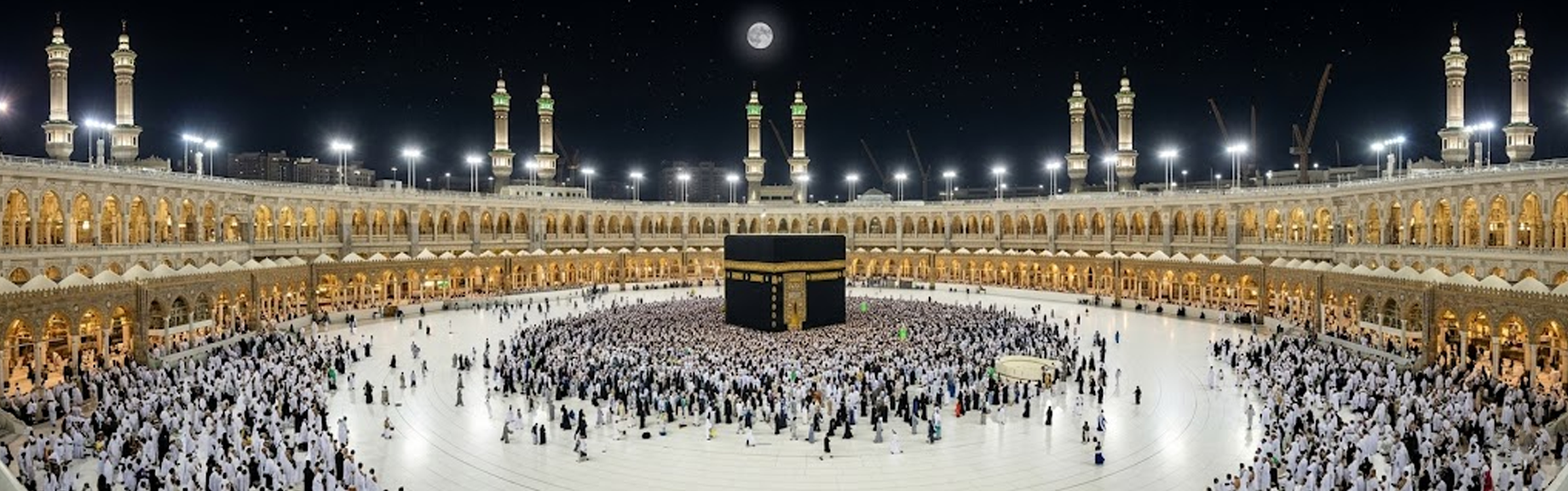
The Umrah rituals themselves, Tawaf, Sa’i, and the rest, typically take between two and six hours to complete, depending on how crowded the Grand Mosque is when you go. The trip around them is what actually takes time: most US travelers should plan for seven to ten days total, once you account for roughly 13 hours of flying to Jeddah, a rest day to recover from the journey, and enough time to actually be in Makkah and Madinah rather than just passing through.
A flight from the US to Jeddah runs about 13 hours in the air, and once you add the ground transfer to your hotel in Makkah, the door-to-door journey comes closer to 20 hours. The rituals waiting for you at the other end of that trip take a small fraction of that time: most pilgrims complete Tawaf and Sa’i together in two to six hours.That gap, between a rite that can be finished in an afternoon and a trip that eats up the better part of two weeks, is exactly where most first-time planning goes sideways. People ask “how long does Umrah take” expecting one number, then build a schedule around the wrong half of the answer.
This guide separates the two clearly: how long the rituals themselves actually take, how long a realistic trip from the US runs once travel and rest are factored in, and what can stretch or compress your timeline depending on when you go. If you have not yet read our guide to getting your Umrah visa from the USA, it is worth pairing with this one, since your visa dates are what your whole itinerary gets built around.
Performed back to back, the core Umrah rituals typically take somewhere between two and six hours, with the exact figure shaped almost entirely by how crowded Masjid al-Haram is on the day you go.
Tawaf, the ritual of walking seven times around the Kaaba, is usually the most variable part. During quieter months, you can typically complete it in 30 to 45 minutes. During Ramadan or other peak periods, when the Mataf area around the Kaaba fills with far larger crowds, those same seven circuits can stretch to ninety minutes or more, according to one Umrah-duration guide. Sa’i, the walk between the hills of Safa and Marwah that follows Tawaf, tends to be more predictable, usually landing somewhere between 30 minutes and an hour. Add the time for entering Ihram, praying near the Maqam Ibrahim, and having your hair cut or shaved to close the rituals, and the whole sequence commonly falls into the range most guides describe: roughly two to three hours when the mosque is calm, and closer to six when it is not.
Here is the part that is easy to miss: that two-to-six-hour window is the ritual time, not your trip time. It answers “how long does Umrah take to perform,” not “how long should my trip be.” Those are two different questions, and mixing them up is how people end up booking a three-day trip and then wondering why it felt rushed.
Most US travelers should plan for somewhere between seven and ten days for a full Umrah trip, not the two to six hours the rituals themselves require.
The reason for that gap comes down to where the time actually goes. A flight from the US to Jeddah typically runs around 13 hours, and once you factor in the transfer to your hotel in Makkah, the full door-to-door journey is closer to 20 hours each way. That is before you have set foot inside the mosque even once.
Because of that travel load, most pilgrims build in at least one full rest day on arrival, mainly to recover from the time difference and the physical toll of a long-haul flight before attempting Tawaf. Skipping that step is not a shortcut, it is a trade: you might save a day on paper, but you risk performing the rituals while exhausted, which is neither comfortable nor, for many people, the experience they traveled this far to have.
Stack those pieces together, the outbound flight and rest day, a few days actually spent in Makkah, an optional stop in Madinah, and the return journey, and the seven-to-ten-day range that most US-focused guides recommend stops looking arbitrary and starts looking like simple arithmetic.
A workable structure for a first Umrah trip from the US runs roughly: one travel day, one rest day, two to three days centered on Makkah, and, if your schedule allows it, two to three more in Madinah before the journey home.
A simple version might look like this:
This is not the only way to structure a trip, and it is not meant to be followed to the letter. What matters is the shape of it: arrival and adjustment before ritual, ritual before extended reflection, and extended reflection before the long flight home. Rearranging that order tends to be where trips slide from memorable into exhausting.
The single biggest factor that changes how long your trip feels is when you travel, with Ramadan and the weeks around Hajj adding both hours to the rituals and days to how much time you end up needing.
Crowd size is the clearest example. The same seven circuits of Tawaf that take well under an hour on a quiet weekday morning can take well over ninety minutes during the final ten days of Ramadan, when the Mataf fills with a far larger number of people moving at a slower, more compressed pace. If your schedule is tight, that difference alone can be the gap between a comfortable day and a rushed one. Your own pace matters just as much, and it is something a lot of first-time planners underestimate. If you would rather move through the rituals steadily, pause to pray, and not feel like you are racing a clock, building extra time into the Makkah end of your trip tends to be worth more than shaving a day off the total to cut costs. A trip that leaves you depleted by the end is not really shorter, it just feels longer in hindsight.
Whether you add Madinah is the other major variable. A trip that stays entirely in Makkah can typically run shorter, while one that includes a proper visit to the Prophet’s Mosque and the surrounding sites in Madinah usually pushes your total closer to the ten-day end of the range. Neither choice is wrong. It depends on what you are hoping to get from the journey, and that is worth deciding before you book your flights, not after.
The question “how long does Umrah take” sounds like it is asking about a ritual. In practice, it is asking about a journey, and the two are not the same thing. The rituals themselves will rarely be what decides whether your trip felt rushed or unhurried. The travel, the rest, and the choices you make about pace before you ever reach the Kaaba are what actually decide that. Plan for the journey, not just the moment at its center, and the moment tends to take care of itself.


