


Umrah Requirements: What US Travelers Need Before They Go
Before you book an Umrah trip from the US, you typically need: a passport valid for at least six months, a Saudi tourist eVisa with your hotel booked through the Nusuk platform first, a rule that has been in effect since June 2025, proof of a meningococcal ACWY vaccine given at least ten days before travel, the right items packed alongside your Ihram, and a basic level of walking fitness, since the rituals themselves cover several kilometers on foot.
Saudi Arabia changed how Umrah visas get processed in the middle of 2025, and pilgrims who had not heard about it found themselves stuck mid-application with a visa that simply would not move forward until they backtracked and booked their hotel a different way.
That is the trouble with “requirements” for a trip like this. They are not one list you check off once. They sit scattered across visa rules, health rules, packing decisions, and basic physical readiness, and several of them shift more often than first-time travelers expect.
This guide pulls all of it into one place, in roughly the order you will need to handle it: what gets you into the country, what keeps you healthy once you are there, what to bring, and what to do with your body in the months before you leave.
The Five Things to Sort Out Before You Book
Five requirements sit ahead of everything else, and getting any one of them wrong tends to cascade into the others. You need a passport with enough validity left on it, the right visa with your accommodation already locked in through the correct platform, a vaccine certificate dated far enough in advance, a packing list built around the restrictions of Ihram, and enough walking stamina to get through several kilometers on your feet without it derailing your trip.
The sections below take each of these in turn, starting with the one that has changed most recently and trips up the most first-timers: the visa.
Visa and Entry: What US Travelers Actually Need
For most US travelers performing Umrah outside Hajj season, the practical route runs through Saudi Arabia’s tourist eVisa rather than a separate, dedicated Umrah visa, and as of June 2025 you cannot get that eVisa finalized until your hotel is already booked through an official Saudi platform.
Start with your passport. The general rule, confirmed on a current Saudi eVisa information page, is that your passport needs to be valid for at least six months from your date of arrival in the country. The same source confirms that “Umrah is a designated purpose under the Saudi Tourist eVisa,” which is why most American pilgrims now apply through the tourist eVisa system rather than chasing a standalone Umrah visa through an agency.
Here is the part that catches people off guard. A rule that took effect on June 10, 2025 requires that “accommodation for pilgrims” be booked exclusively in licensed hotels and documented electronically on the Nusuk Masar platform before the visa can be issued, according to Saudi Arabia’s own Ministry of Hajj and Umrah, reported by Gulf News. In plain terms: you book the hotel first, through the right channel, and the visa application follows. Do it in the order you are used to from other countries, visa first and lodging later, and your application can stall before it ever reaches a decision.
The mitigation here is straightforward, even if the rule itself is new. Confirm with your travel agency, or directly through Nusuk if you are booking independently, that your accommodation is being registered on the Nusuk Masar platform before any visa paperwork is submitted. Rules like this one have shifted more than once in the past two years, so it is worth a quick check close to your actual travel dates rather than relying on what a blog post, including this one, said even a few months earlier.
The Meningococcal Vaccine: What “Required” Actually Means Here
The meningococcal ACWY vaccine, which protects against a fast-moving bacterial infection that can spread quickly through large, close-packed crowds, is treated as a firm entry requirement for Umrah travelers by the US Centers for Disease Control. The CDC states plainly that “the Kingdom of Saudi Arabia requires that all travelers aged one year and older arriving for Hajj or Umrah show proof that they have received a quadrivalent (ACWY) meningococcal vaccine”.
That guidance is not universal across every health authority, and it is worth being upfront about that rather than pretending the picture is perfectly clean. A UK meningitis-focused organization frames Umrah slightly differently from Hajj, noting that “it’s currently possible to perform Umrah without having had the vaccine. But it’s not recommended, due to the increased risk of meningitis associated with pilgrimages and past outbreaks resulting from them”. For Hajj, by contrast, that same source calls the vaccine an unambiguous “compulsory entry requirement.”
What that disagreement means for you, in practice, is simple: every authoritative source that covers this, whether it frames the rule as absolute or strongly advised, lands on the same recommendation. Get the vaccine. Time it for at least ten days before you travel, since that is the minimum window most authorities require for the certificate to count, and the certificate itself typically needs to show a vaccine given within the last three to five years, depending on which version you receive. Showing up at the airport without that paperwork, when an officer is checking for it, is not the moment you want to discover which interpretation your specific entry point is enforcing.
Other Health Checks Worth a Quick Look Before You Travel
The meningococcal vaccine gets most of the attention, but it is not the only health item on a current pre-Umrah checklist, even if the others matter less for someone flying directly from the US.
Polio comes up mainly for travelers connecting through countries where the virus is still circulating: UK travel-health guidance notes a polio vaccine dose is required for arrivals “if they are travelling [through affected countries], not if they are travelling directly to” Saudi Arabia. If your routing involves a layover somewhere outside North America or Western Europe, it is worth checking whether that leg falls into an affected zone.
COVID-19 and seasonal flu are both worth a mention to your doctor before you go, with current guidance pointing toward simply being “up to date” on COVID vaccines and recommending, though not requiring, a flu shot ahead of large-crowd travel. None of this needs to turn into a research project on its own. A single conversation with a travel clinic a few weeks before departure typically covers all of it in one visit, and that conversation is also the natural moment to confirm your meningococcal certificate is dated correctly.
What to Pack Beyond Your Ihram
Packing for Umrah is not the same exercise as packing for a typical trip abroad. Most of what you actually reach for day to day has to work inside the restrictions of Ihram and survive long hours of standing and walking, which rules out a fair amount of what might otherwise feel obvious to bring.
A dated 2025 packing guide aimed at first-time pilgrims recommends a short, practical core list: light, loose clothing made of breathable fabric for the periods before and after you are in Ihram, comfortable sandals or slippers “that can withstand long walks,” travel-sized unscented toiletries such as toothbrush, soap, and deodorant, since scented products conflict with the Ihram restrictions, a compact travel prayer mat with a small pouch for personal items, and a portable charger for the long stretches between Makkah and Madinah.
A packing list for Umrah is not really a fashion decision dressed up as a checklist. It is closer to packing for a multi-day walking event that also happens to come with specific religious dress restrictions, and treating it that way, rather than packing the way you would for a city break, is what keeps you comfortable once you are actually there.
Getting Your Body Ready for the Walking
The rituals themselves cover more ground on foot than most first-timers picture in advance. A single full Tawaf can run close to three and a half kilometers during busy periods, and Sa’i adds roughly another three on top of that.
One detailed planning resource breaks the distances down clearly: each circuit of Tawaf covers “at least 200 metres” in quieter conditions but stretches to “between 400 and 500 metres” when the area is crowded, putting a full seven-circuit Tawaf at around 3.5 kilometers during busy periods, while the walk between Safa and Marwah for Sa’i runs “approximately 450 metres” each way, with all seven legs adding up to “approximately 3.15 kilometres” and taking roughly 35 to 40 minutes.
That same resource recommends starting to build toward this roughly three to four months before departure: begin with short walks of “20-30 minutes, 3-4 times a week,” and gradually work up toward sessions of five to six kilometers. Skip that preparation, and the rituals can turn from a meaningful experience into a physical ordeal you are just trying to survive. A few months of modest, regular walking is a small investment against that risk, and it compounds faster than most people expect.
Requirements That Are Specific to Women
Two questions come up constantly from women preparing for a first Umrah: whether they need a male guardian to travel, and what happens if their period starts during the trip. The mahram question has its own detailed answer (it is covered in full in our guide to performing Umrah step by step), so this section focuses on the second one, which gets far less attention than it deserves.
The core ruling, according to a scholarly Islamic resource focused specifically on menstruation guidance, is that “a menstruating woman cannot circumambulate the Ka’bah (tawaf), as it requires her to be ritually pure”. That sounds like it could derail an entire trip, but the same source draws an important distinction: the area where Sa’i takes place sits technically outside the boundary of the sacred mosque, so “it is permitted for her to enter this area while in hayd,” meaning while menstruating. In other words, a period delays Tawaf specifically. It does not necessarily delay everything.
The practical guidance that follows from that is fairly direct. If your period starts before you complete the obligatory Tawaf, the recommended approach is to wait in Makkah until you become pure again, “even if that means extending her stay”. Where extending a stay is not realistic, the same source notes that some women choose, after consulting a doctor, to use medication that delays the cycle, which it describes as permissible in principle though worth discussing with a physician well before the trip rather than improvising once you have already landed. Building one or two buffer days into your itinerary, and having that conversation with a doctor in advance, turns a potential trip-derailing surprise into a manageable adjustment.
Meeting the Requirements Is the Floor, Not the Trip
None of what is listed here, on its own, makes for a meaningful Umrah. A valid passport, a correctly sequenced visa, a vaccine certificate dated right, a bag packed with the right things, legs that can handle the walking: none of that is the point of going.
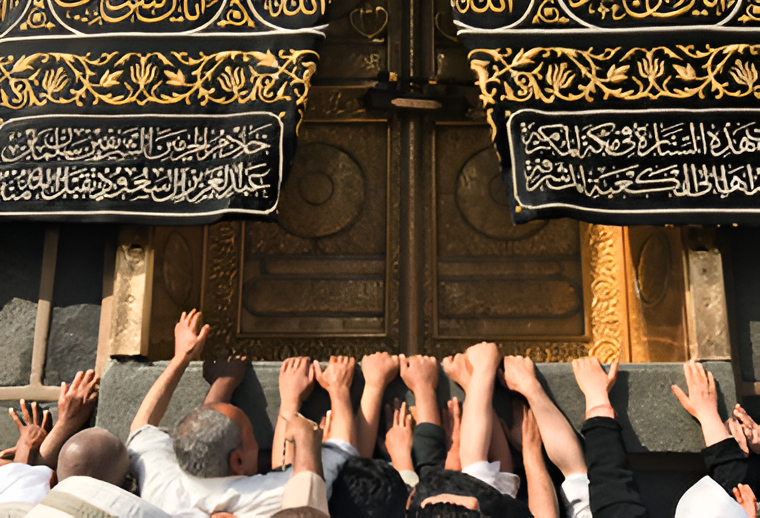
What it does is clear the runway, so that once you are actually standing in front of the Kaaba, nothing as mundane as a paperwork problem, a missed vaccine window, or legs that gave out on day two is what you remember most about the trip you waited years to take.

Get a Free Umrah Quote
Tell us your city, travel dates, and budget. We’ll send you a tailored package in under 24 hours.
Our Umrah Packages
Packages by US City
Explore Our Most Popular Packages
Ready to Book Your Umrah?
Talk to our team today — no commitment, just honest guidance. We’ll match you to a package that fits your city, budget, and travel dates.


