Where you live changes three things about an Umrah trip booked from the United States: which flight routings are realistic, whether a community group departure is available to you, and, to a smaller degree, the price floor of a package.
Travelers flying out of Los Angeles can sometimes catch a seasonal nonstop to Jeddah around the Hajj season, though most Umrah-specific departures connect through Doha, Dubai, or Istanbul and add several hours to the trip. Chicago has no nonstop Saudi service at all, yet it supports one of the most active group-departure markets in the country, with several agencies running scheduled trips out of O’Hare throughout the year.
Wherever you’re based, though, the agency you choose ends up mattering more than the airport code printed on your ticket.
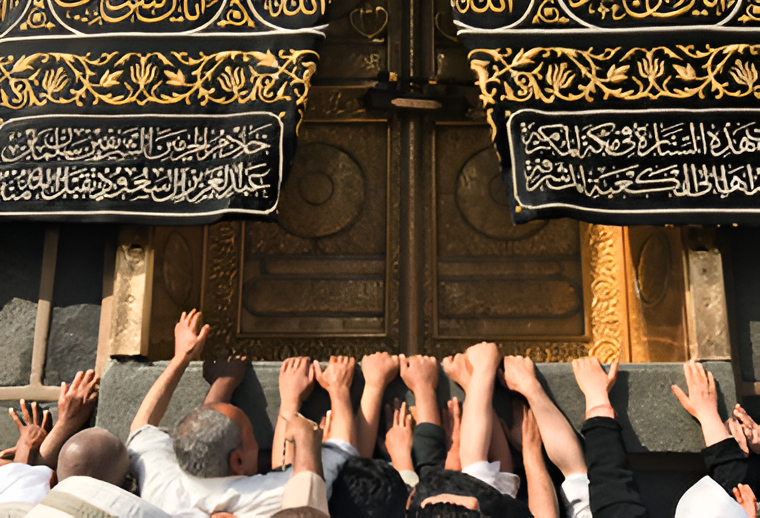
Type a search for “Umrah package” from almost any large American city and the results look similar at first glance: dozens of agencies, similar stock photos of the Kaaba, similar promises of the best price guaranteed. Some of the differences underneath that surface are real, though, and they’re tied directly to where you live.
Southern California is home to one of the largest Muslim populations in the country, often estimated at well over half a million people across Los Angeles, Orange County, and the Inland Empire. That density supports a small industry of dedicated Umrah travel agencies that doesn’t exist in the same form in smaller cities. Chicago has a similar history: the South Side, along with suburbs like Bridgeview and Skokie, has organized community Hajj and Umrah groups for decades. In cities like Houston, Dallas, Detroit, and New York, the picture shifts again. Fewer agencies specialize only in Umrah, but general travel agencies with a dedicated Umrah desk are common, and mosque-organized group trips often fill the gap.
This breakdown starts with Los Angeles and Chicago, the two most-searched cities for Umrah travel from the US, then widens out to cover the rest of the country. The short version is that your departure city changes routing and travel time more than it changes price, and the single biggest variable in how your trip goes isn’t your airport. It’s which agency is holding your booking.
If you’re booking an Umrah package from Los Angeles, plan for a long first travel day for most of the year, even though a direct option exists around one season. Saudia’s nonstop LAX to Jeddah service is seasonal, generally operating around the Hajj period rather than year-round. For Umrah travel outside that window, which covers most of the calendar, most Los Angeles-based Umrah packages route through a connecting hub: Doha on Qatar Airways, Dubai on Emirates, or Istanbul on Turkish Airlines. Total travel time on these routings typically runs sixteen to twenty hours, including the layover.
A handful of agencies advertise more direct options regardless of season. International Hajj, for example, markets Los Angeles departures with a more direct routing to Jeddah than the typical connecting itinerary, though actual availability depends heavily on the travel dates and the time of year.
Pricing for LA-based packages spans a wide range. Agencies serving Los Angeles list packages anywhere from roughly $1,500 for a basic departure with shared hotel rooms to $5,000 or more for premium accommodations close to the Haram. What typically moves the price isn’t the airport you’re leaving from. It’s the hotel tier, the room occupancy, and how close the hotel sits to the Grand Mosque.
One scheduling detail worth checking before you book: some Los Angeles-based packages route through Medina first and Mecca second, while others reverse the order. Neither sequence is inherently better, but it affects which city you’ll be in during the early, jet-lagged days of the trip. Some travelers prefer to perform the more physically demanding rituals in Mecca after a day or two to adjust.
A standard LA package usually bundles round-trip airfare from LAX, hotel stays in Mecca and Medina, ground transport between cities, visa processing, and a group leader who provides religious guidance during the core rituals. Some packages add a Ziyarat tour, a guided visit to historically significant sites in and around Medina, as a separate add-on rather than a default inclusion.
Chicago has no nonstop flight to Saudi Arabia, but it has one of the most established group-departure cultures of any US city. If you’re searching for an Umrah travel agency in Chicago, you’ll find a noticeably denser field of options than in most cities of similar size, a reflection of the long-standing South Side and suburban Muslim communities in Bridgeview, Skokie, and along Devon Avenue.
Flights out of O’Hare connect to Jeddah or Medina through Doha, Dubai, or Istanbul, the same three hubs that show up for Los Angeles departures. Several Chicago-based agencies run scheduled group departures with multiple trip-length options, ranging from about four days to ten days or more. Other agencies, including Tarteel Travel and Taqwa Tours, also list Chicago-specific departure dates alongside their national packages.
The advantage of booking through a Chicago-based agency isn’t really about the flight, since the routing options look similar to what a traveler from Houston or Dallas would see. It’s the depth of the local group network. Agencies that have run the same trip for years tend to have established relationships with specific hotels in Mecca and Medina, and returning travelers from the same community often serve informally as group leaders for first-timers.
The largest US cities outside Los Angeles and Chicago split into two patterns: direct access to Saudia’s nonstop network, or a strong local agency market that fills the routing gap.
New York sits in the first category. Saudia runs a year-round nonstop between JFK and Jeddah, which makes New York one of the more straightforward departure points logistically. Several agencies, including Dawah Travels, build their New York packages around this nonstop option rather than routing through a third country.
Houston and Dallas fall into the second category. Neither airport has nonstop Saudi service, so travelers connect through Doha or Dubai, reflecting the strong Gulf-carrier presence at both IAH and DFW. Dawah Travels and several other agencies operate dedicated Houston packages, often timed around community group departures rather than daily availability.
Detroit is its own case. The Detroit-Dearborn area has the highest concentration of Arab Americans in the country, a community with deep, multi-generational ties to mosques that have organized group pilgrimages for decades. Flights from Detroit Metro connect through a hub like most non-NY/DC departures, but the density of established community groups often means a Detroit traveler has an easier time finding a trusted, personally-vouched-for agency than someone in a city with a smaller or newer Muslim population.
If you live somewhere without a single dedicated Umrah agency, the same checks still apply: ask your mosque first, confirm any agency against the Ministry’s approved list, and compare packages on what’s included rather than the headline number. Travelers from smaller cities, college towns, or areas with newer Muslim communities often end up booking through a national agency based in a larger city, which is normal and not a sign of a weaker package.
What’s worth double-checking in this situation is the connection. The agency only needs to add a domestic flight to get you to the group’s departure point, but if that domestic leg and the international flight are booked separately, build in enough buffer that a delay on the first one doesn’t put the second at risk, particularly when the international flight only departs once or twice a week.
A group Umrah package isn’t just a bundle of seats sold at a lower per-person rate. It’s a shared support structure for the trip itself. Mosque and community groups of ten or more travelers typically qualify for negotiated airfare and hotel block rates, where the agency reserves a set number of rooms in advance at a fixed nightly price. That’s the financial side, and it’s real, but it’s not the main reason most first-time pilgrims choose a group departure.
The bigger difference is what happens once you land. A group departure usually comes with a designated leader, often an experienced traveler or local imam, who handles check-in logistics, coordinates the timing of group visits to the Haram, and can answer questions about the rituals in real time. For someone traveling with an elderly parent, or for a first-time solo traveler, that built-in support often matters more than the few hundred dollars saved on the group rate.
This is also where your community ends up mattering more than your zip code. A traveler in Houston whose mosque runs an annual Umrah trip may have access to a tighter, more personal group experience than someone in a larger city booking through an agency they found online with no community connection at all. Before searching broadly, it’s worth asking your local mosque or Islamic center whether they organize or partner with a group trip. If they do, that’s often a better starting point than comparing prices across national agency websites.
Yes, but usually by a few hundred dollars, not by thousands. Routing differences do create real cost differences. A nonstop or near-nonstop itinerary from a city like New York can sometimes carry a premium over a one-stop routing through Doha or Istanbul, because fewer airlines compete on the direct route.
In practice, that difference tends to be modest, often in the range of one to a few hundred dollars on the airfare portion of a package. The bigger swings in total package price come from the hotel tier, how many people share a room, and the length of the trip, all of which are independent of where you’re flying from.
If your home city has a thin Umrah agency market, one option worth considering is treating a domestic flight to a hub city like Chicago, New York, or Los Angeles as part of the trip. A traveler from a smaller Midwest city, for example, might find that booking a Chicago-based group package and adding a separate domestic flight to O’Hare costs about the same as, or less than, booking a less-established package departing from their home airport, while gaining access to a more experienced group leader.
An agency that advertises “IATA accredited” or “ARC accredited” on its homepage has cleared a financial bar, not a quality bar. IATA, the International Air Transport Association, and ARC, the Airlines Reporting Corporation, are the bodies that authorize travel agencies to issue airline tickets directly and require them to be bonded against certain types of financial failure. Sara International Travel, for instance, lists its IATA/ARC accreditation prominently as part of its credentials.
That accreditation tells you the agency can legally sell you a plane ticket and has met certain financial requirements tied to ticketing. It doesn’t tell you anything about the hotel’s actual distance from the Haram, how experienced the group leader is, or how the agency handles a flight cancellation or a hotel downgrade once you’re already in Saudi Arabia.
For that, two other checks matter more. First, the Saudi Ministry of Hajj and Umrah maintains a list of approved agents, and confirming an agency appears there is a baseline check worth doing regardless of what city you’re in. Second, look for reviews that describe specific past trips rather than generic star ratings, since detailed reviews tend to reveal how an agency behaves when something doesn’t go according to plan, which is the situation that actually determines whether a package was worth the price.
A few warning signs apply no matter which city you’re booking from. Be cautious of agencies that only accept payment by wire transfer or cash, that don’t list a physical business address, or that can’t provide the name of the hotel until close to departure. None of these alone proves a problem, but together they make it harder to get a refund or file a dispute if the trip doesn’t match what was promised.
The questions that matter most are about what happens if something goes wrong, not what’s listed as included when everything goes right. A useful starting list covers cancellation policy, flight change procedures, and group leader contact details, and a few of these are worth asking regardless of which city you’re booking from.
Ask what happens if your flight is rescheduled by the airline, since this happens more often on connecting itineraries through Doha, Dubai, or Istanbul than on nonstop routes. Ask who the group leader is by name, and whether you’ll have a direct way to reach them once you’re in Saudi Arabia. And ask for the hotel’s actual walking distance to the Haram in minutes, not in marketing language like “steps away” or “minutes from the Holy Mosque,” since that distance affects your daily routine more than almost any other detail in the package.
Where you live shapes the route of an Umrah trip, not its value. A traveler from Los Angeles and a traveler from Chicago might land in Jeddah within a few hours of each other despite starting from opposite sides of the country, and both might pay roughly the same amount for similar hotels and trip lengths. What actually separates a smooth trip from a frustrating one rarely comes down to the airport code on the ticket. It comes down to whether the agency’s group leader showed up, whether the hotel was where the listing said it was, and whether someone answered the phone when a flight got delayed. Start with your local mosque or community group if one exists, check any agency you’re considering against the Ministry of Hajj and Umrah’s approved list, and compare packages by what’s actually included rather than by the price on the homepage. The city you fly from will shape the first day of your trip. Everything after that depends on who you booked with.

Tell us your city, travel dates, and budget. We’ll send you a tailored package in under 24 hours.
Talk to our team today — no commitment, just honest guidance. We’ll match you to a package that fits your city, budget, and travel dates.